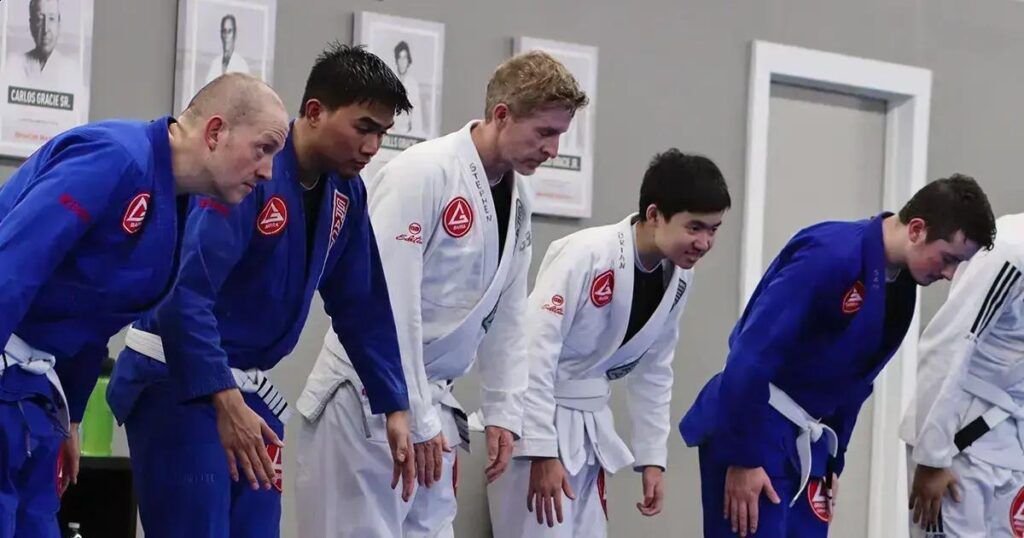
Have you ever wondered what “rolling” really means in Jiu-Jitsu? Hi, I am Head Prof. Seidler Rodrigo from Gracie Barra Herriman, and I have seen how this controlled sparring session is a cornerstone of both building skill and confidence. Rolling is where theory meets reality, allowing students of all ages to challenge themselves safely. What I have seen over the years is that rolling not only develops technique but also teaches patience and respect, values that extend beyond our jiu jitsu school into life itself.
Defining Rolling: What Happens on the Mat
At Gracie Barra Herriman, one of the most important parts of training is “rolling.” Rolling is a term we use for live sparring — it’s where everything you learn comes alive. What I see every day on the mat is students pushing their limits while learning how to keep things safe and respectful. Rolling isn’t about winning or losing; it’s about understanding timing, control, and flow. This experience builds humility and patience, qualities that help immensely beyond jiu-jitsu.
Why Rolling is More Than Just Sparring
Rolling allows you to test your skills in real time. But the real lesson isn’t about defeating an opponent. It’s learning how to stay calm under pressure. Imagine solving a problem at work or dealing with a tough conversation at home. Rolling is similar — you learn to stay composed, think clearly, and respond appropriately.
One of the biggest breakthroughs for our students is when they realize that getting caught in a tough position on the mat isn’t failure. It’s an opportunity to understand their mistakes and improve. This mindset builds resilience, which spills over into daily life challenges.
Creating a Safe and Respectful Environment
The great thing about rolling at Gracie Barra Herriman is how much emphasis we place on respect and safety. Rolling is controlled and consensual; everyone understands the importance of tapping out when caught. What I always tell my students is, “Your tap is your voice. Use it to protect yourself so you can train another day.”
Respecting your partner ensures that the training environment stays welcoming and supportive. When you trust each other, you learn faster and feel more confident. You also build meaningful connections — a community that supports your journey on and off the mats.
“Rolling is learning resilience. It teaches you how to manage stress and find solutions calmly. This is what stays with you long after the class ends.” — Head Prof. Seidler Rodrigo
Safety Protocols That Keep Rolling Controlled
At Gracie Barra Herriman, safety during rolling is our top priority. What I see every day is how clear safety protocols create a space where students feel confident to push their limits without worry. Rolling is an art of controlled movement; it’s not about force, but about technique, awareness, and respect for your training partner.
Why Safety Protocols Matter
Safety protocols aren’t just rules; they are the foundation for learning and growth. When you understand and trust these guidelines, you can fully focus on improving your skills. It’s similar to learning to ride a bike with training wheels. Those wheels ensure you don’t fall hard while you’re mastering balance and coordination. Once you gain confidence, those safety nets fade, but the lessons about care and control stay with you.
Key Safety Practices at Gracie Barra Herriman
- Communication: Always check in with your partner. If something feels uncomfortable, speak up. This builds trust and prevents injuries.
- Tapping Early and Clearly: Tapping is your signal to stop and is respected without exception. It’s an essential tool for safety and learning.
- Controlled Intensity: We encourage rolling to be challenging but never reckless. This balance allows you to test your limits safely.
- Instructor Guidance: Experienced professors like myself monitor every roll to ensure safety and offer corrections in real time.
- One of the biggest breakthroughs for our students is realizing that respecting these rules lets them progress faster and stay injury-free. The mat becomes a place of confidence and achievement.
“The great thing about rolling at Gracie Barra Herriman is that safety and respect are never optional. They are the heart of every class, making jiu-jitsu a lifelong journey, not just a moment on the mat.” — Head Prof. Seidler Rodrigo
How Rolling Enhances Technical Skills and Strategy
What I see on the mat every day at Gracie Barra Herriman is how rolling helps students develop technical skill and strategy in a way no other training can. When you roll, you are putting your knowledge into practice against a live, moving opponent. This dynamic environment teaches you to adapt, think ahead, and use precision, not just strength.
Rolling as a Real-Time Problem-Solving Exercise
Rolling is like a chess match; each movement is a move in a larger plan. You learn to anticipate your partner’s actions, to defend and attack creatively. This sharpens your reflexes and decision-making skills. One of the biggest breakthroughs for our students is realizing that jiu-jitsu isn’t about brute force, but about cleverness and patience.
When a student learns to apply a technique with timing and control during rolling, they’re actually training skills they can use in everyday life: patience when facing challenges, calmness in situations of stress, and careful planning for complex tasks.
Continuous Learning Through Experience
The great thing is that rolling reveals what you really know and what needs improvement. Every session gives you new information about yourself and your technique. This feedback loop speeds progress and builds confidence. It’s like practicing a musical instrument; the more you play, the more natural it feels.
“Rolling trains your mind as much as your body. It teaches you to stay calm, think clearly, and find solutions — lessons that carry far beyond the mat.” — Head Prof. Seidler Rodrigo
Building Confidence Through Controlled Sparring
At Gracie Barra Herriman, controlled sparring, or rolling, plays a crucial role in building genuine confidence. What I see on the mat every day is students evolving from tentative beginners to individuals who carry themselves with assurance both inside and outside the academy. Rolling teaches you to trust your skills and your instincts in real situations, which translates directly into everyday life.
Confidence That Grows From Experience
One of the biggest breakthroughs for our students is realizing that confidence is not about perfection. It’s about showing up, making mistakes, and improving in a supportive environment. Rolling is like learning to swim—you start small, getting your feet wet, and gradually you build strength and courage to dive deeper.
When you trust your training partner and yourself, you will notice that fear of failure diminishes. This trust builds a strong foundation for facing life’s uncertainties with calmness and resilience. Students often tell me how this newfound calm helped them during stressful moments at work or at home.
The Role of Respect and Control
The great thing is, confidence comes naturally when everyone respects each other’s limits. At Gracie Barra Herriman, we emphasize controlled intensity, where sparring partners listen and adapt to each other’s pace. This safe space encourages risk-taking and learning without anxiety.
“Rolling is not about overpowering; it is about understanding yourself and growing your confidence one move at a time. That is the heart of what we do at Gracie Barra Herriman.” — Head Prof. Seidler Rodrigo
Common Questions About Rolling and Safety
At Gracie Barra Herriman, we often get questions about rolling and the safety involved, and what I see on the mat every day reassures me that these concerns are natural and valid. Rolling is designed to be a safe, controlled environment where respect and communication guide every interaction. Understanding the answers to common questions helps students feel more comfortable and confident as they grow.
How Do We Ensure Safety While Rolling?
Safety comes first, and that means knowing your limits and listening to your body. We teach students to tap early—that means signaling to your partner when something doesn’t feel right. This simple act prevents injuries and builds trust. It’s like having a stop sign in a conversation; it keeps everyone safe and respected.
Is Rolling Suitable for Beginners?
Absolutely. At Gracie Barra Herriman, we ease beginners into rolling with careful guidance. The great thing is that everyone starts slow and learns to control their movements. What happens next is a build-up of confidence and skill in a positive, supportive setting. There’s no rush or pressure to be perfect from day one.
What About Injuries?
Injuries are rare when safety protocols are followed, and our instructors constantly monitor each roll. Think of rolling as exercise where you gradually increase intensity. The slower and more mindful you are in the beginning, the less chance for injuries. Plus, the community here supports recovery and learning.
“One of the biggest breakthroughs for our students is realizing that safety and trust make rolling a powerful tool for growth. You can push yourself confidently because you know you’re backed by a caring team at Gracie Barra Herriman.” — Head Prof. Seidler Rodrigo
What I want you to take away is that rolling in Jiu-Jitsu is not just about fighting or competition. It is a journey of growth, learning, and building confidence that reaches far beyond the mat. At Gracie Barra Herriman, we focus on making rolling safe, respectful, and full of chances to improve yourself — both in technique and in life skills like patience and resilience.
If you have been thinking about starting, come visit us at Gracie Barra Herriman for a free class. I would be glad to welcome you on the mat and show you what Jiu Jitsu can do for your life. Remember, every master was once a beginner who simply decided to take that first step.
FAQ – Common Questions About Rolling and Safety in Jiu-Jitsu
Is rolling safe for beginners?
We always tell our new students that rolling is absolutely safe for beginners. At Gracie Barra Herriman, we start slow and focus on controlled movements to build confidence without risk. You are welcome to try a free class and experience this supportive environment.
What should I do if I feel uncomfortable during rolling?
You might be surprised to learn that your tap is your voice. We always encourage students to tap early if they feel uncomfortable. This stops the action and keeps everyone safe. Feel free to come and learn at your own pace with a free trial at our academy.
How does rolling improve skills and confidence?
Rolling is like practicing real-life problem-solving on the mat. It teaches you to stay calm, think ahead, and trust your training. Many students tell me how this confidence helps them outside the gym as well. Join us for a free class to see how it works firsthand.
What safety measures are in place during rolling?
We follow strict safety protocols at Gracie Barra Herriman including clear communication, tapping rules, and instructor supervision. These rules create a safe and respectful environment. You’re invited to come and experience our classes with a free trial session.
Can children participate in rolling safely?
Yes, children are welcomed and we adapt training to fit their needs. We emphasize respect, control, and fun so they learn safely while building discipline and confidence. Bring your child for a free introductory class and see the positive impact.
What if I am worried about getting injured?
Injuries are rare when rolling is done with respect and control. We always tell our students that safety is the heart of training. You can start slow and gain skill without fear. Come try a free class at Gracie Barra Herriman to feel how careful and supportive our community is.